History · 20 November 2026
Why Fortuna? Meet the goddess of the game
Many of you will know that there are eight playable human characters in the game: all of these people really existed, and each of them provides a special ability to help you on the way to victory. However, the game's most important NPC is actually not a human but a GODDESS: the Renaissance goddess, Fortuna!
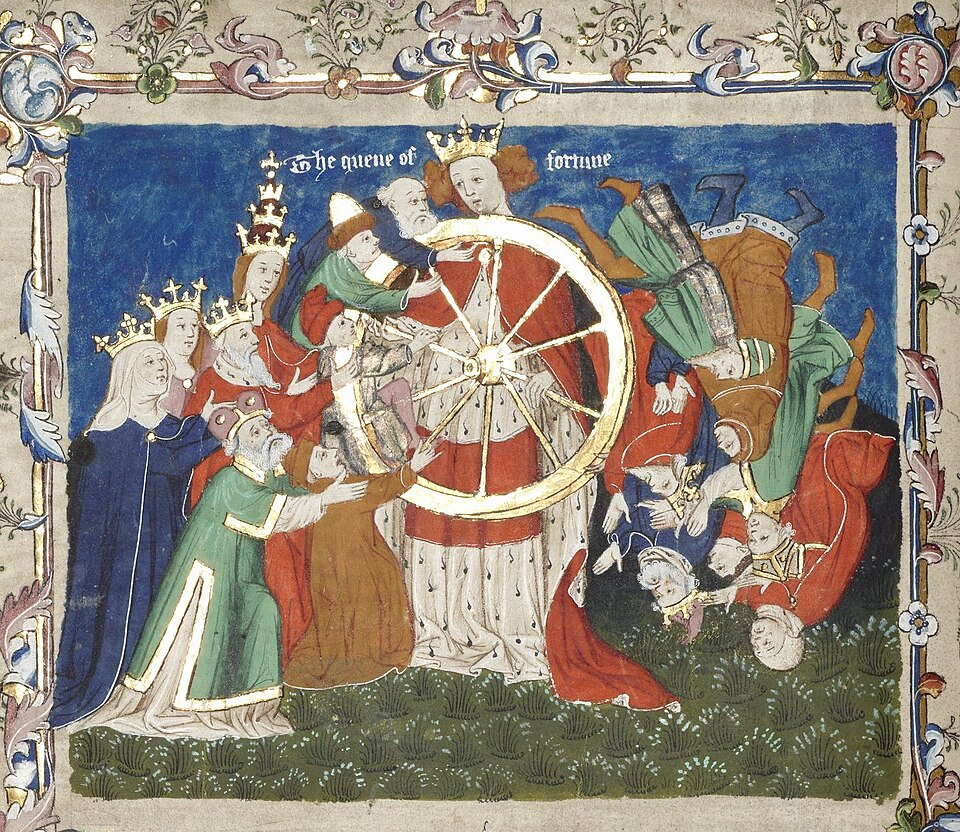
Renaissance goddess? Well, kind of. Fortuna was the ancient Roman goddess of luck, and you prayed to her if you wanted to have good luck (to be more precise, the name comes from the Latin word ferre, meaning “to bring”: Fortuna was the goddess who “brought” you good stuff – or not). After the advent of Christianity, people stopped worshipping Fortuna, but the concept survived in literature and art. During the Middle Ages, she was usually portrayed as a queen standing over a wheel that raised and lowered human beings in an endless cycle.
Then, in Renaissance Italy, something interesting happens: Fortuna gets a makeover. Instead of impassively supervising her ever-spinning wheel, she suddenly becomes much more energetic, dynamic, and, well – rather sexy! And we start to find this image all over the cities of Renaissance Italy (the first one below is from Siena, the second is atop the customs house in Venice at the end of the Grand Canal).
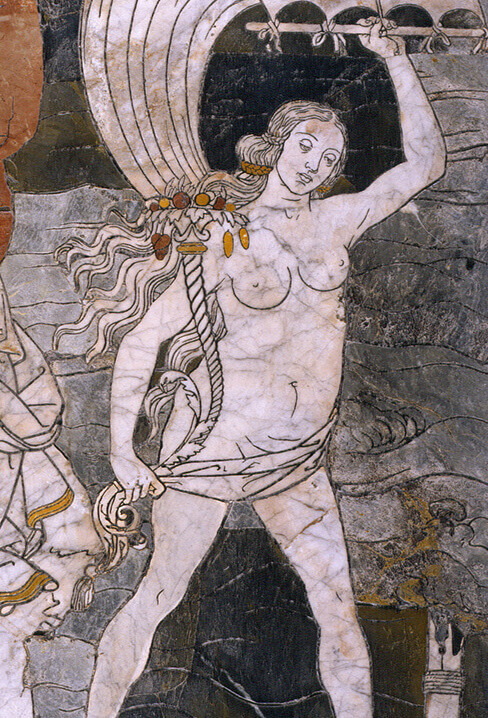
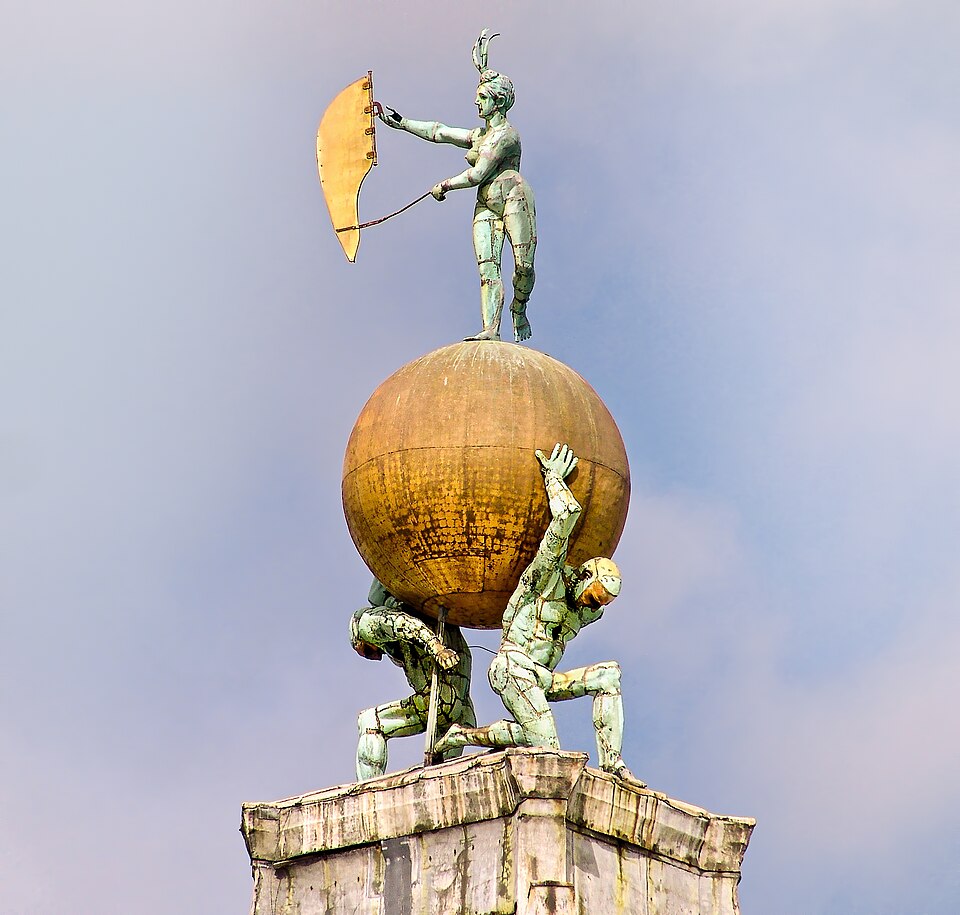
Why the change? Many of the leading citizens of cities like Florence and Venice were avid renaissance humanists i.e. deeply interested in the literature and culture of ancient Greece and Rome. But by day, many of them were also bankers and merchants. Venice, for example, was Europe’s gateway to the silks and spices of the East, whilst Florence and Genoa were great centres of trade, banking, and finance. The inhabitants of these cities therefore used the figure of the ancient Roman goddess as a way of thinking about the risk and uncertainty they faced in their own lives and careers. Maritime trade was the source of their wealth and prestige, but travel by sea was incredibly risky. (Commercial seafarer remains the world’s second-most dangerous profession even today). In this context, renaissance Fortuna picked up some new attributes. In one hand she carries the cornucopia (the cone-shaped bag or horn full of gold, jewels, fruits, and other desirable swag), and in the other she holds the sail. She thus represents the wealth but also dangers that maritime trade can bring. As our Italian Fortuna fans will know, the word “fortunale” in modern Italian still means “a storm”, and even in Turkish, the word for a storm remains “fırtına” (the term was probably borrowed from the Genoese merchants who frequented the city of Istanbul).
The fact that Fortuna becomes suddenly rather more dynamic and racy isn’t an accident either. The medieval version of Fortuna was impassive, inevitable, reliably unpredictable. Now, however, Renaissance Italians were presented with the enticing possibility that the skilled individual might be able to entice or control this fickle creature (if you’re thinking at this point that this new renaissance version of Fortuna seems a little “male-gazey”, you’re definitely not wrong: but that’s another story). The citizens of Florence, Venice, and Genoa had developed instruments to manage risk, such as insurance; they were experienced commercial operators with sophisticated strategies to deal with unforeseen disasters. They were proud of their risk-taking and risk-managing, though still aware that things might easily go wrong. This is why Fortuna is often portrayed as standing precariously on spheres like an acrobat, or with her sails full of the winds of opportunity. Fortuna was still dangerous, for sure, but she could be held steady with sufficient determination and skill (or is that just what she wants you to think??)
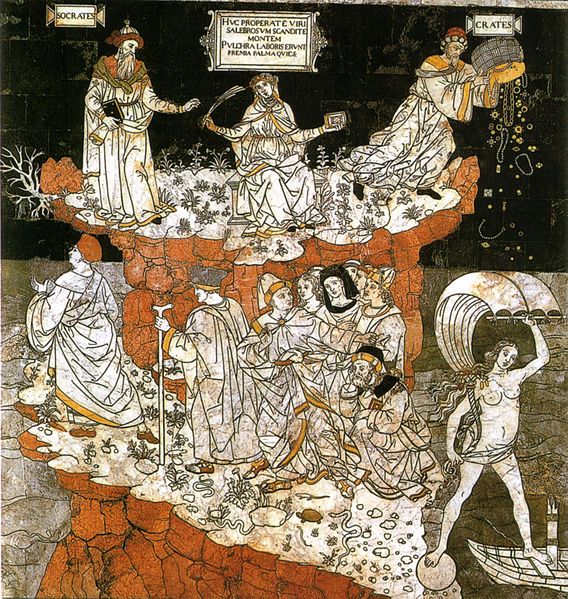
Sometimes, Renaissance representations of Fortuna encourage us to reject her enticements and risks and to fix our gaze on higher things. Hence the floor mosaic of Siena cathedral shows the traveller who ascends the “mountain of wisdom” beginning their journey by climbing out of Fortuna’s storm-lashed boat, leaving the goddess well behind.
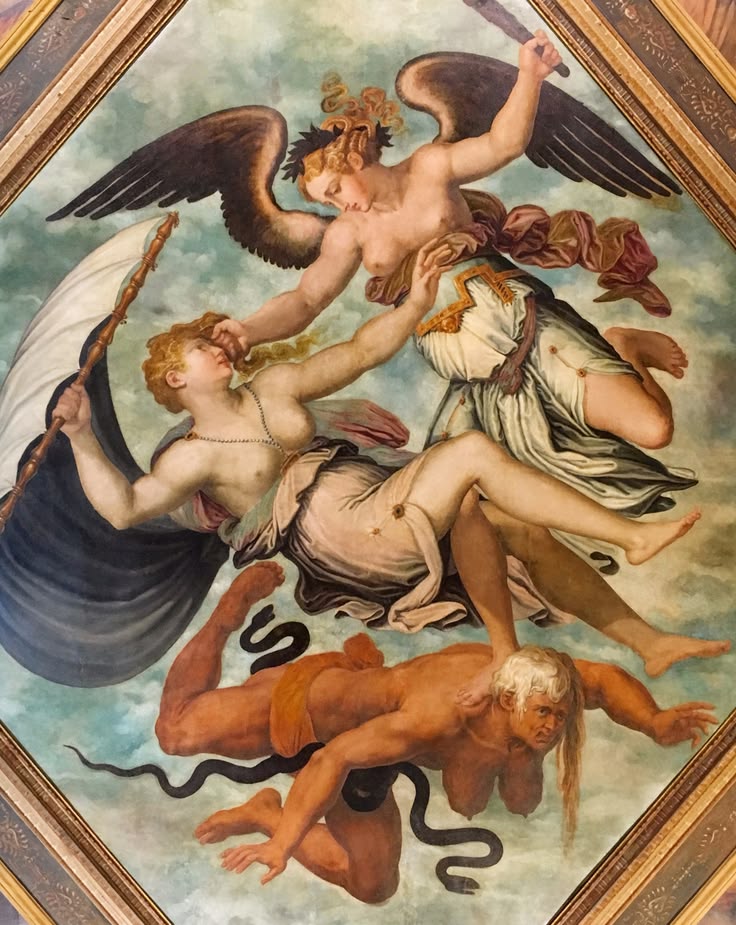
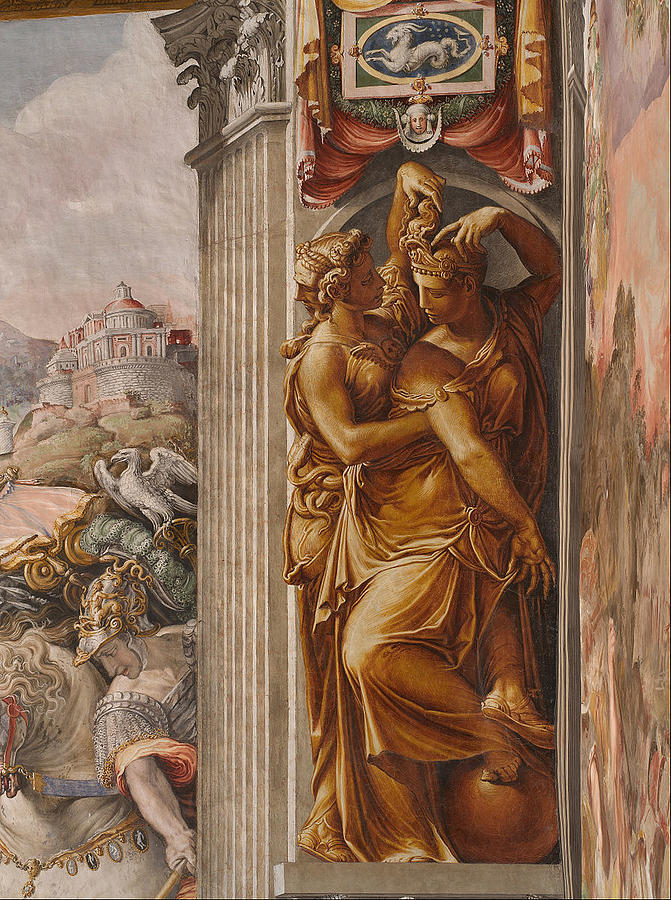
At other times, however, it seems that virtuous conduct, skill, or prudence might overpower Fortuna – or at least persuade her to play nicely. So, for example, in one representation by the renaissance artist Giorgio Vasari, we find virtue trampling Fortuna (and also Envy) underfoot; in a painting by Francesco Salviati we find prudence gently corralling Fortuna into line. As the Florentine merchant Buonaccorso Pitti wrote, reflecting on his own successful career, “anyone who finds himself struck by Fortuna knows that he has not held to the most secure way”. His Florentine contemporary, Giovanni Rucellai, who had to liquidate his bank in 1480, no doubt saw things differently. In a tax declaration, he writes “I was struck by Fortuna, and all my capital is consumed”.
Ultimately, the Renaissance obsession with Fortuna was not pure fatalism, but was a meditation on control, and the extent to which we can or should try to insure ourselves against life’s unexpected turns. The question was never definitively answered. Historians have sometimes read a lot into renaissance merchant’s statements on the subject, but it seems to me that, above all, their reactions reflected an all-too-human attitude to triumph and disaster: when things went well, they tended to big up their own skill in managing Fortuna; if they had gone badly, they tended to blame the fickle goddess!
When I designed Fortuna, I wanted to create a game that better reflected this aspect of business life, which had been such a big part of historical reflections on trade and commerce. In the game, therefore, Fortuna hides in the main deck; when a Fortuna card is drawn, the player has to turn over an event card. Most of these are bad events (there are a lot of storms!) although there are a few good events like inheritances of land. Other events are innovations (things like insurance, joint-stock companies, coffee houses) that, once uncovered, help the players to manage the risks of maritime trade.